Welcome to aubaine.ca!
Welcome to aubaine.ca!
Welcome to aubaine.ca!

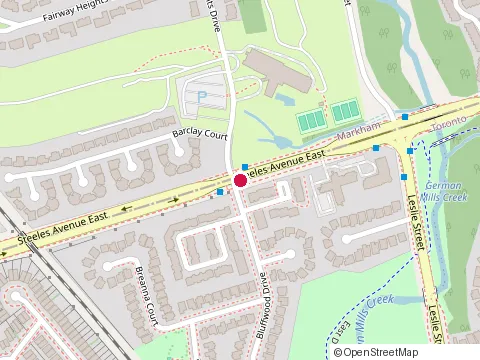
Gibson Long Term Care Residence, private residences in North York.
Gibson Long Term Care Residence is a senior care community located at 1925 Steeles Ave E in North York, Ontario, offering residential support for older adults who need daily assistance and supervised care. The residence serves the surrounding North York area, a part of Toronto known for its mix of established residential neighbourhoods, mid-rise apartment corridors, and a large aging population that increasingly looks for care options close to family and familiar surroundings. Families searching for long-term care in this part of the city often want a residence that keeps their loved one within reach of the same neighbourhood, doctors, and community ties they have relied on for years, rather than moving further afield.
Steeles Avenue East is a well-travelled corridor connecting several North York neighbourhoods, and a residence positioned along it is generally easy to reach by car or public transit for visiting family members. For many households, proximity matters as much as the level of care offered, since regular visits are a meaningful part of a resident's routine and well-being. A long-term care residence in this setting is built around consistency: predictable meals, a stable living environment, and staff support available around the clock for residents whose needs go beyond what can be managed at home.
Gibson Long Term Care Residence provides accommodation paired with daily personal care, meals, and support services designed for residents who require ongoing assistance. The core of the offering is long-term care itself: a home-like living environment where residents receive help with daily activities, along with housekeeping and laundry handled on their behalf so that day-to-day life is simplified.
Meals are prepared on-site and served daily, an important part of long-term care since nutrition needs often change with age and with specific health conditions. Recreation and social programming are also part of the offering, giving residents structured opportunities to stay engaged through group activities and organized events rather than spending most of the day alone in a private room. For residents with more specialized needs, care that extends into memory support and mental health support may be part of the continuum offered, reflecting the reality that long-term care residences frequently serve people at different stages of cognitive and physical decline within the same community.
Beyond permanent residency, this type of care setting commonly supports respite stays, short-term or temporary placements that give family caregivers a planned break while their loved one continues to receive full care in a supervised setting. Adult day programs can also be part of the picture, offering a structured schedule for seniors who still live at home but benefit from social interaction, supervision, and a change of environment during the day. Families considering any of these options for a resident in North York should contact the residence directly, since eligibility, availability, and current programming can vary and are best confirmed with staff rather than assumed in advance.
Preparing well for a long-term care placement reduces stress for both the resident and the family, and it starts with understanding the level of care actually needed. Before reaching out, it helps to have a clear picture of the daily support required, whether that is help with mobility, medication management, memory-related supervision, or general personal care, since this will shape the conversation with residence staff about whether the home is a good fit.
Documentation is usually a significant part of the process. Families are generally expected to provide medical history, a list of current medications, and information from a physician or care coordinator that supports the level of care being requested. Having these documents organized ahead of a first phone call or visit tends to make intake conversations faster and clearer. It is also worth preparing a short list of questions about daily routines, visiting arrangements, and how the residence handles changes in a resident's condition over time, since these details vary by facility and are best confirmed directly.
For a move itself, most families find it useful to plan the transition gradually rather than all at once. Bringing familiar personal items, such as photographs, a favourite chair, or small keepsakes, can help a new resident settle into an unfamiliar room more comfortably. Coordinating the move during a weekday, when staff availability for orientation tends to be more consistent, is also a common practical step. Payment arrangements should be confirmed directly with the residence, since long-term care in Ontario typically involves a combination of provincial funding and accommodation charges that depend on room type and individual circumstances; various payment methods are generally accepted, but exact terms should always be verified with staff rather than assumed.
Families in North York and the broader Toronto area often begin this process during a period of transition, such as after a hospital stay, a decline in a parent's ability to live independently, or a caregiver reaching the limits of what they can manage at home. Reaching out early, even before a placement is urgently needed, allows more time to ask questions, tour the residence, and make a decision that fits the resident's needs rather than one made under pressure.
The residence provides long-term care for seniors, including daily personal care, prepared meals, housekeeping, laundry, and recreation programming, with additional support available for residents who require specialized or memory-related care.
Long-term care residences of this kind commonly offer respite and temporary stays for caregivers who need a planned break, though availability should be confirmed directly with staff before making arrangements.
It helps to have medical history, a current medication list, and physician documentation ready, along with a clear sense of the daily support the prospective resident needs, since this information shapes the intake conversation.
The residence can be reached by phone at 416-493-4666, or by visiting its location at 1925 Steeles Ave E in North York, Ontario, to ask about care options, tours, and current availability.
Gibson Long Term Care Residence is listed under “Private residences” of the Canadian business directory, in North York. Details, products and services on its website. Contact: 416-493-4666.
Not published yet — the owner can add them by claiming this listing.
Regular gasoline, Toronto East — 182.1 ¢ (market average, week of August 31, 2026)
| Station | Address | Distance |
|---|---|---|
| Esso | 1505 Steeles Avenue East North York | 0.8 km |
| Petro-Canada | 274 Steeles Avenue East | 1.7 km |
| Esso | 7010 Woodbine Avenue | 2.3 km |
| Esso | 7001 Woodbine Avenue | 2.3 km |
| Esso | 1500 Finch Avenue East | 2.4 km |
Station locations: © OpenStreetMap contributors (ODbL). Prices: Government of Ontario weekly fuel price survey — a market average, not the price at this station.
No review yet for this business. Be the first to share your experience.
💛 Our promise: helping you save. Despite all the care we put into tracking prices, we simply cannot guarantee they are accurate at all times — they come from flyers and merchants and can change without notice. Every week, we work to give you a fair and reliable picture so you can follow your products, spot real discounts and buy at the right time, at the best price. At aubaine.ca, every dollar saved matters: our mission is to hunt down the best deals for you. Always confirm the final price in store or with the merchant.
Every comment gets read. That is how aubaine.ca improves.
Grow with us and earn deals
Subscribe and get the weekly flyers, coupons and best deals. Members earn Aubaine Points with every action — reviews, feedback, purchases — and climb through the tiers.
Double opt-in by email · one-click unsubscribe.
 English
  Français